10 Activity Ideas with Host Children (Indoor & Outdoor)
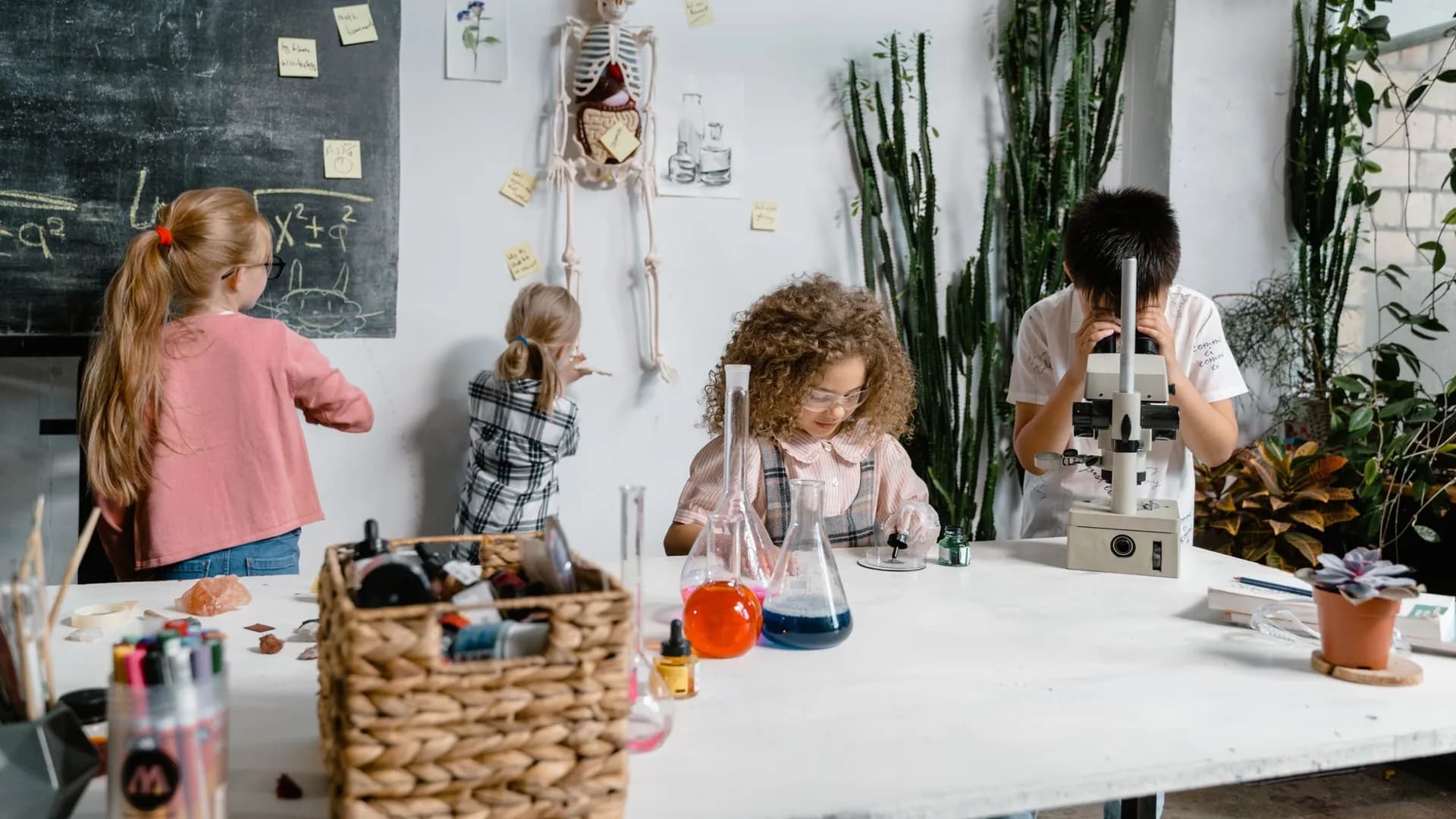
Photo: MART PRODUCTION / Pexels
The best activities with your host children are cheap, age-appropriate and screen-free — and they mix indoor with outdoor. You don't need pricey day trips or ready-made craft kits: a treasure hunt around the garden, an hour of baking, or reading aloud in your native language leave a bigger impression than any screen — and cost almost nothing.
Here are 10 tried-and-tested ideas, sorted into indoor and outdoor, with the right age range and what the children learn along the way. Pick whatever suits the weather, the mood and the energy level — and remember: bringing your own language and culture is your biggest asset.
10 ideas at a glance
This table shows you at a glance what fits when — from toddlers to primary-school children. The age ranges are rough guides; adjust them to the individual child.
| Idea | Indoor/Outdoor | Age | Learning effect |
|---|---|---|---|
| Treasure hunt with hand-drawn maps | Both | 4–10 years | Logic, orientation, teamwork |
| Baking together (cookies, muffins) | Indoor | 3–10 years | Measuring, counting, patience |
| Craft & creative hour | Indoor | 3–10 years | Fine motor skills, imagination |
| Reading aloud in your native language | Indoor | 1–10 years | Language, new sounds, bonding |
| Building with blocks or cardboard | Indoor | 2–8 years | Spatial thinking, persistence |
| Park & playground | Outdoor | 1–10 years | Movement, social contact |
| Nature walk & collecting | Outdoor | 2–10 years | Curiosity, nature knowledge |
| Mini-sport & movement games | Both | 3–10 years | Coordination, following rules |
| Simple science experiments | Indoor | 5–10 years | Cause & effect, wonder |
| Board & card games | Indoor | 3–10 years | Patience, fairness, counting |
Indoor: ideas for rainy days and evenings
When the weather doesn't cooperate, these classics save the day:
- Baking: baking cookies or muffins together is maths, patience and reward all in one. Let the children measure, stir and cut out shapes — then taste the results together.
- Craft & creative hour: with paper, glue and pens, a whole world appears in ten minutes. Seasonal themes (autumn leaves, paper stars) give it structure.
- Reading aloud in your native language: this is your trump card as an au-pair. Children love new sounds, even when they don't understand every word. Point at pictures, translate single words — and language becomes exciting almost by accident.
- Building with blocks or cardboard: a big cardboard box becomes a castle or a spaceship. It builds spatial thinking and often keeps them busy surprisingly long.
- Simple experiments: a baking-soda volcano, plant dyes, or sink-or-float with a bowl of water — small aha-moments using things from around the house.
- Board & card games: memory, Uno or a dice game teach fairness and patience — and are perfect for quiet evenings.
Outdoor: movement and fresh air
As soon as the weather allows, get the children outside:
- Treasure hunt: hide small clues around the garden or park and let the children find the „treasure“ (a few stickers, an apple). With a hand-drawn map it turns into a little adventure.
- Park & playground: the most fuss-free classic — movement, climbing, and the children often meet others to play with.
- Nature walk & collecting: gather leaves, stones, sticks or conkers and sort or glue them at home. It links being outdoors with a craft idea for later.
- Mini-sport & movement games: tag, hopscotch, a simple obstacle course or chasing bubbles — it burns energy and makes for an easy bedtime.
A good rule of thumb: plan one active block outdoors and one calm block indoors per day. That keeps the mood balanced — and you too.
Safety first: before you start
As lovely as the ideas are, sort out a few basics with the parents before the first activity:
- Allergies & diet: before you bake or snack, ask about food allergies and intolerances. When in doubt: don't give anything that hasn't been cleared.
- Supervision: never leave younger children unsupervised outside, near water or at the playground. Know the family's rules around swimming.
- Agreement with the parents: clarify in advance which places, outings and screen times are okay — and whether you're allowed to leave the garden.
- Emergency numbers: save the parents' mobile numbers, the emergency line (112 across the EU) and the home address in case you need to give it.
These five minutes of preparation give you the confidence to focus on the fun — and give the parents the reassurance that their children are in responsible hands.
Your biggest asset: bring in your own language and culture. Teach the children a song, a game or a recipe from your home country. It's a gift to the children — they get to know the world — and it fulfils the very idea of being an au-pair: cultural exchange in both directions.