Au-Pair Packing List: What You Really Need (with Checklist)
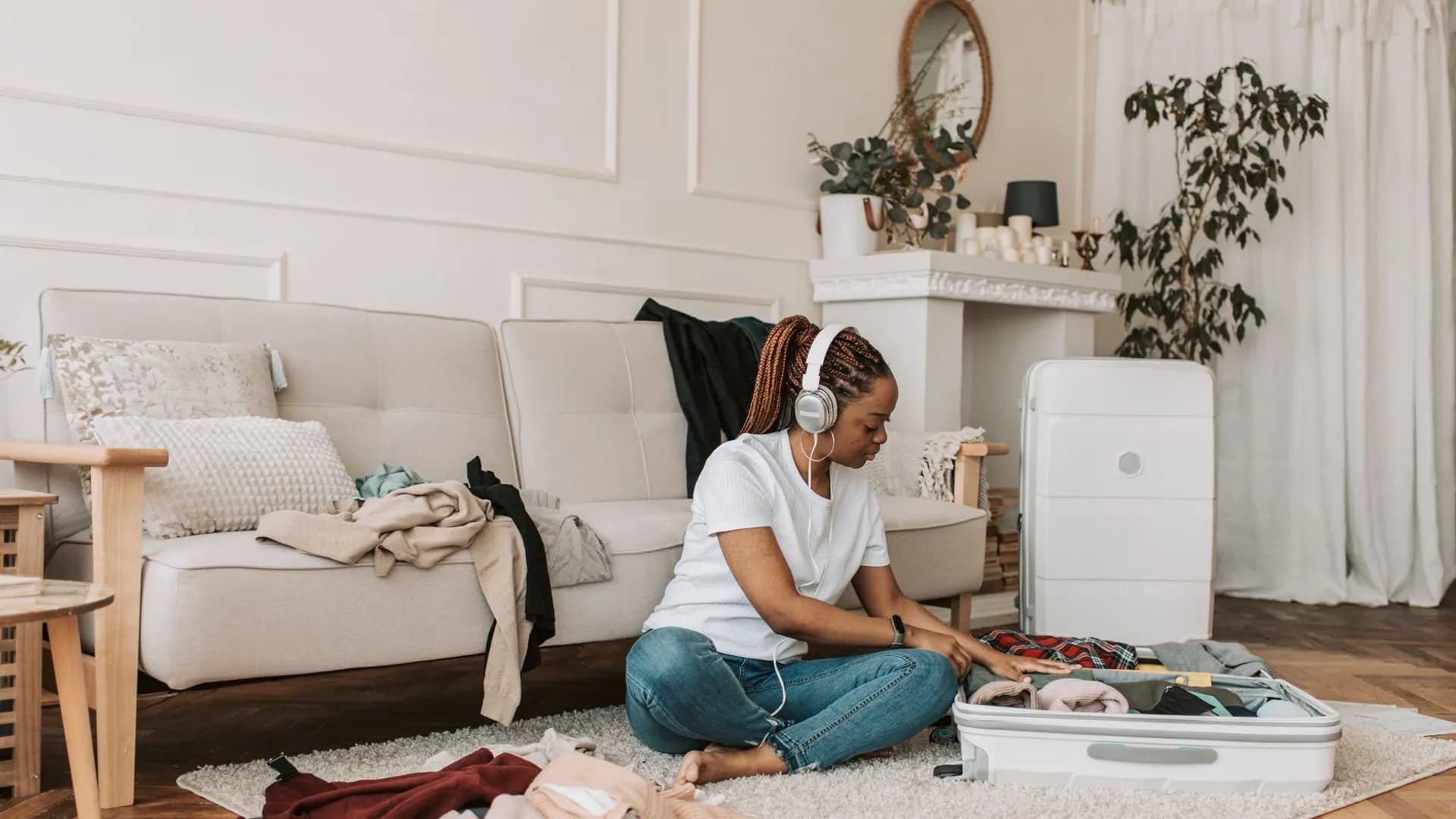
Photo: Vlada Karpovich / Pexels
In short: In your hand luggage you should pack your passport, contract, proof of insurance, bank card, and medication. In your suitcase, bring clothing for layering, a few items for the children, and something for homesickness. Everything else you can buy on site.
You have found your host family, the departure date is approaching – and suddenly half of your wardrobe is on the bed. This list will help you pack wisely: what truly needs to come with you, what’s better to buy there, and how to stay within the weight limit. At the end you’ll find a checklist to tick off.
1. Document folder: everything in carry‑on luggage
Your documents are the only things that can’t be quickly replaced. Pack them in a sturdy folder and keep them always in your hand luggage – never in checked baggage.
- Passport or ID card – valid for your entire stay, preferably with a buffer.
- Visa or residence document – only if you need one. Check early whether this applies to your destination country and nationality.
- Au-Pair contract – signed, both as a paper copy and digitally.
- Proof of insurance – health, accident and liability insurance, with an emergency hotline.
- Certificates and diplomas – language certificates, school leaving certificate, first‑aid course, references from child‑care. Some language schools and authorities request these.
- Driver’s license – if you’ll be driving a car for the host family. Find out beforehand whether an international driving permit is also required in the destination country.
- Bank card – plus a spare card, stored separately.
- Passport photos – a few biometric photos for registration, language courses or monthly passes.
- Address and phone number of the host family – on paper, in case your phone runs out of battery.
Scan each document and place the copies in a password‑protected cloud folder. Share it with a trusted person at home. If something gets lost, you’ll have a copy within minutes for the embassy or insurance.
2. Money and Phone
For the first few days you’ll need some cash in the local currency – for the bus, snacks, or a SIM card. Also bring a card that works abroad without high fees. Let your bank know in advance that you’ll be staying abroad for an extended period.
It’s worth checking your phone: is it unlocked so a local SIM or eSIM will work? Are your banking app and two‑factor authentication set up to operate with a new number? Which apps will really help you in daily life, from language tools to public transport, you can read about in our article on the best apps for your Au-Pair year.
3. Clothing: Layered outfits instead of a suitcase full of clothes
The most important rule: Pack less than you think. You’ll stay for months, not weeks – the weather changes, and you’ll shop locally. Choose clothing that can be mixed and layered.
- Basics for 7–10 days: T‑shirts, sweaters, two to three pairs of trousers, underwear and socks. You can wash them at the host family.
- Layers: a fleece or knit jacket and a lightweight, waterproof jacket. That will get you through spring, autumn and cool summer evenings.
- Kid‑friendly clothing: You’ll be on the playground floor, painting and cooking. Comfortable items that can handle stains are worth their weight in gold.
- Shoes: a pair of comfortable everyday shoes, a pair for rain, possibly sports shoes.
- A nicer outfit for parties, outings or an evening with other Au‑Pairs.
If you travel in the summer and stay through the winter, you don’t necessarily have to bring the warm jacket. Often it’s cheaper and easier to buy it locally – or have your winter gear sent to you later.
4. Medication and Health
If you take medication regularly, pack a supply for the first weeks – in your hand luggage and in the original packaging with the leaflet. Have your doctor give you a short note in English that states the active ingredient and dosage. This helps at customs and with doctors in the host country.
- Prescriptions or a list of active ingredients for refills
- Glasses or contact lenses plus spares and a current prescription
- Small travel medical kit: band‑aids, pain relievers, something for colds and stomach issues
- Period products for the first days
Find out before you leave how you can obtain your medication in the destination country. Some items may require a prescription there or be known under a different name.
5. For the children: a piece of your culture
As an au-pair you take care of the children – and at the same time bring your language and culture into the family. That’s why a little space in your suitcase is worth it:
- Small gifts from home: typical sweets, a children’s book, a plush toy or postcards from your city.
- Books, songs and games in your language: a picture book for reading aloud, a playlist of children’s songs, a simple card game from your country.
- Photos and a map of your hometown: children love to see where “their” au-pair comes from.
- A small welcome gift for the parents – something typical, not expensive.
These items break the ice in the first days. A song or a game quickly becomes a shared ritual.
6. Things to combat homesickness
Homesickness affects almost everyone at some point – often not in the first week, but later. A few familiar items can make your new room feel more like home faster: a pillowcase or a small blanket, photos of family and friends, your favorite tea, a notebook or diary. You can find more about what really helps in our 10 tips against homesickness as an Au-Pair.
7. Technology and Digital Security
- Travel adapter: Check beforehand which plug type is used in the destination country. An adapter with USB ports saves space.
- Charging cable and power bank – the power bank belongs in carry‑on luggage.
- Headphones for the flight, bus and language podcasts.
- Backup: Secure photos, contacts and documents before you take off. Write down important numbers on paper as well.
What you don’t have to pack
You can get many things in the host country just as well – often cheaper than the cost of excess baggage:
- Shampoo, shower gel and detergent in large bottles (travel sizes are enough for the first days)
- Towels and bed linen – check with the family beforehand what is already in the room
- Hair dryer and straightener, if the voltage in the destination country is different
- Stationery and household items
- Heavy winter clothing, if you arrive in the summer
Here's how you stay within the weight limit
Check limit
Check your booking: how much can the suitcase weigh, and how much the hand luggage? An additional piece of luggage booked in advance is usually cheaper than at the airport.
Lay everything out, then a third away
Put everything you want to bring on the bed. Then take out about a third—especially clothes you might wear.
Heavy in hand luggage, heavy to put on
Wear the heaviest shoes and the thickest jacket on the flight. Books and electronics often fit better in carry‑on luggage.
Weigh at home
Weigh the suitcase with a luggage scale or on a bathroom scale. Leave a few kilograms of space for the return trip and gifts.
Your checklist to tick off
| What | Where to | Done |
|---|---|---|
| Pass or ID, possibly visa | Carry-on luggage | ☐ |
| Au-Pair contract (paper + digital) | Carry-on luggage | ☐ |
| Insurance certificates with hotline | Carry-on luggage | ☐ |
| Certificates, language certificates, driver's license | Carry-on luggage | ☐ |
| Bank card + replacement card, some cash | Carry-on luggage (separate) | ☐ |
| Medication in original packaging + doctor's letter | Carry-on luggage | ☐ |
| Mobile phone, charging cable, power bank, adapter | Carry-on luggage | ☐ |
| Host family's address on paper | Carry-on luggage | ☐ |
| Clothing for 7–10 days in layers. | Suitcase | ☐ |
| Rain jacket and comfortable shoes | Suitcase | ☐ |
| Gifts, books, games for the children | Suitcase | ☐ |
| Familiar Things to Combat Homesickness | Suitcase | ☐ |
| Documents stored in the cloud | digital | ☐ |
The Pre-Departure Checklist for Parents complements this packing list well. And when you have arrived, our Checklist for the first week as an Au-Pair helps you settle in.